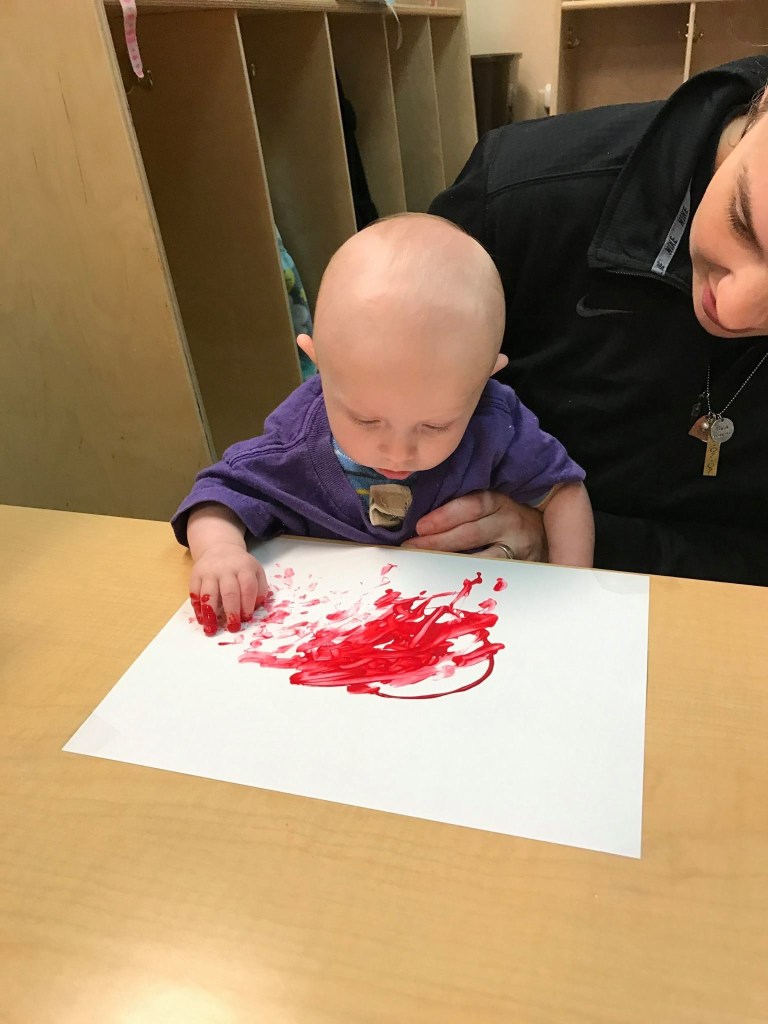
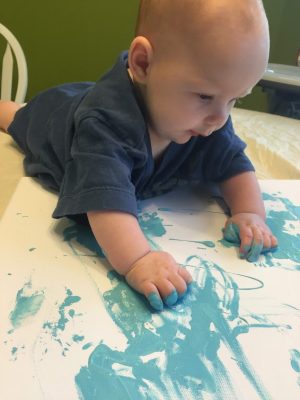
Painting with infants might sound a little messy (and it can be!), but it’s also a powerful way to support their growing minds. Art experiences invite even our youngest learners to explore, create, and make sense of the world around them. With the right materials and a few easy setup tips, painting can become a joyful and developmenally rich experience for infants.
Setting up the Stage for Success
Before the paint comes out, take a few minutes to prepare the space and materials. A little planning goes a long way!
Try these simple setup tips:
- Dress for success: Use oversized shirts or smocks to protect clothing and keep cleanup simple.
- Choose safe materials: Always use washable, non-toxic paint designed for young children.
- Secure the paper: Tape paper to the highchair tray or table with painter’s tape to prevent it from sliding around.

Mess-free painting option: For a cleaner alternative, squirt a small amount of paint and a piece of sturdy paper inside a ziplock bag, seal it tightly, and tape it down. Babies can press and squish the paint around to mix colors and create patterns—no cleanup required!
Why Paint? The Developmental Benefits
Painting can be a meaningful learning experience that supports multiple areas of development.
Fine Motor Development: Each pat, swipe, and squeeze builds hand-eye coordination and strengthens the small muscles needed for later skills like feeding and writing.
Sensory Exploration: Paint play introduces textures, temperatures, and colors, allowing infants to engage their senses and learn through discovery.
Cognitive Growth: As babies notice cause and effect (“When I move my hand, the color spreads!”), they’re developing early problem-solving and observation skills.
Language Development: Narrate what you see—“You’re using the red paint!” or “That’s a big circle!”—to build vocabulary and introduce descriptive language during the process.
Emotional Expression: Art gives infants a way to express curiosity, joy, and even frustration in a safe, open-ended way. It’s one of the earliest forms of self-expression.


Tips for Educators
- Keep expectations realistic—infant painting is about the process, not the product.
- Display their artwork proudly! Even the smallest smudge can spark conversation and celebrate effort.
- Use photos or documentation panels to capture the experience and reflect on children’s engagement.
- Connect with families—share the developmental benefits so they can try similar activities at home.
Painting with young children is so much more than colorful paper, it’s a window into exploration, creativity, and connection. When we provide opportunities for infants to create, we’re supporting the earliest steps toward confidence, communication, and curiosity.
 The Growing Minds Collective
Leave a comment